AD — As an Amazon Associate I earn from qualifying purchases.
Planning Guide
12 Camping Essentials for a Comfortable Peak District Break
A comfort-first guide to the camping essentials worth considering for a relaxed Peak District break, from your tent and sleep setup to cooking gear, lighting and practical campsite extras.
By Big Deal Babe·
There is something lovely about escaping for a couple of nights in the British countryside. No airports, no complicated itinerary and no pressure to fit dozens of attractions into each day — just a tent, a comfortable place to sit and some beautiful scenery to explore.
If you’re planning a UK camping trip this year, the Peak District is a brilliant place to consider. With its rolling hills, walking routes, pretty villages and scenic countryside, it offers the kind of setting that makes a few nights under canvas feel like a proper escape. For inspiration and ideas, take a look at the official Visit Peak District & Derbyshire website.
I would approach this as a relaxed two-night trip for two adults travelling by car. This is not an ultralight hiking kit designed to fit into a tiny backpack. It is a comfort-first packing list for anyone who wants to enjoy sleeping outdoors without feeling as though they are taking part in an endurance challenge.
Here are the 12 camping essentials I would recommend considering to help make the trip comfortable, practical and properly enjoyable.
Start with a tent that gives you room to breathe
A two-person tent may technically sleep two people, but that does not necessarily mean it will feel comfortable once you add bags, shoes, coats and everything else you have brought with you.
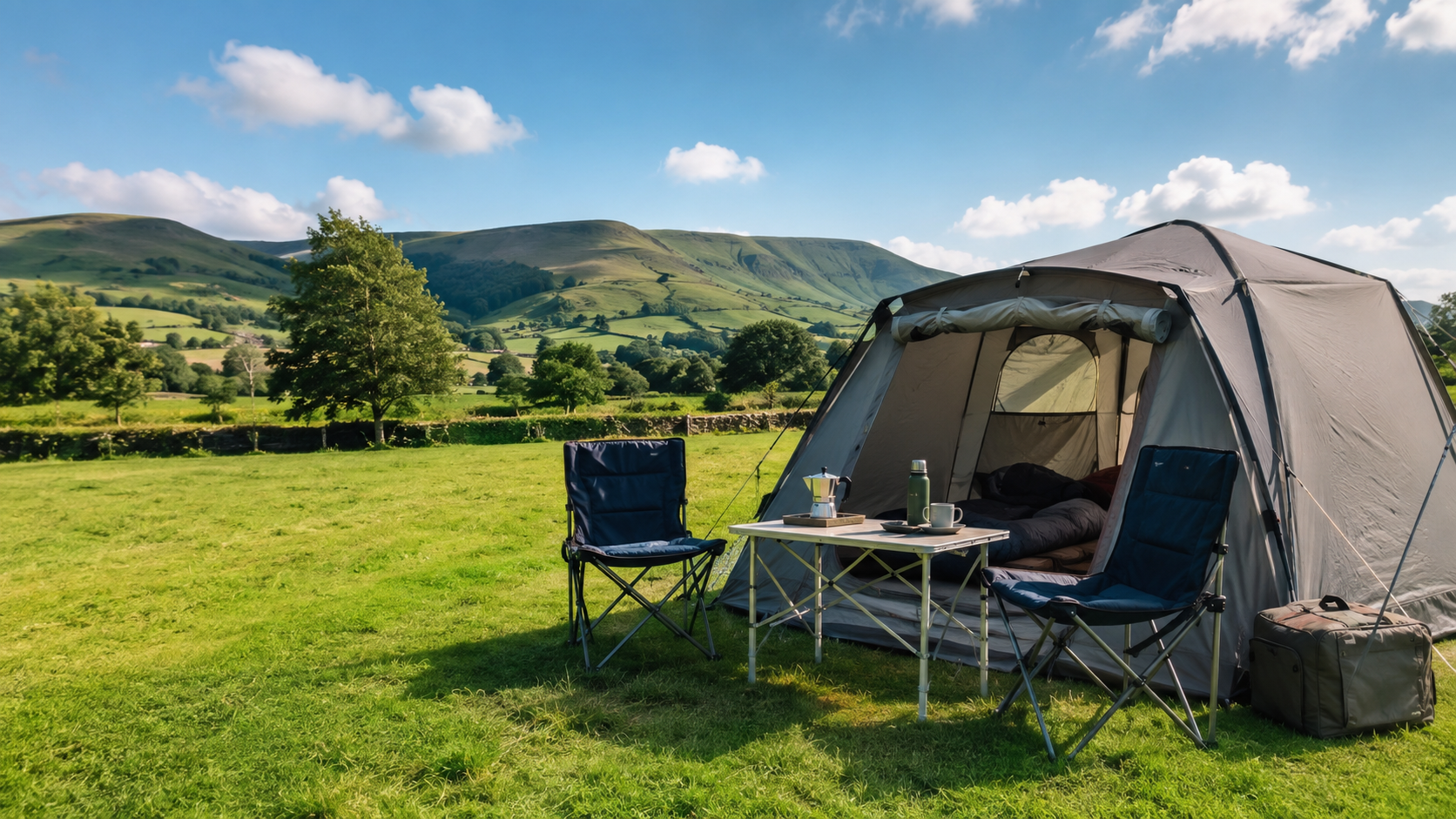
For two adults, I would choose a roomier option such as this Portal four-person blackout tent with a porch. The extra space gives you somewhere to organise your belongings, while the porch creates a useful buffer between the sleeping area and muddy footwear or damp coats.
Before booking, check that your chosen campsite accepts the size and type of tent you plan to bring. It is also worth choosing an authorised campsite rather than assuming you can pitch anywhere that looks inviting. Wild camping is not generally permitted within the Peak District National Park without the landowner’s permission, so it is sensible to check the official guidance before you go.
Make the sleeping area genuinely comfortable
The quickest way to spoil a beautiful camping trip is to spend the first night cold, uncomfortable and listening to the sound of your airbed slowly deflating.
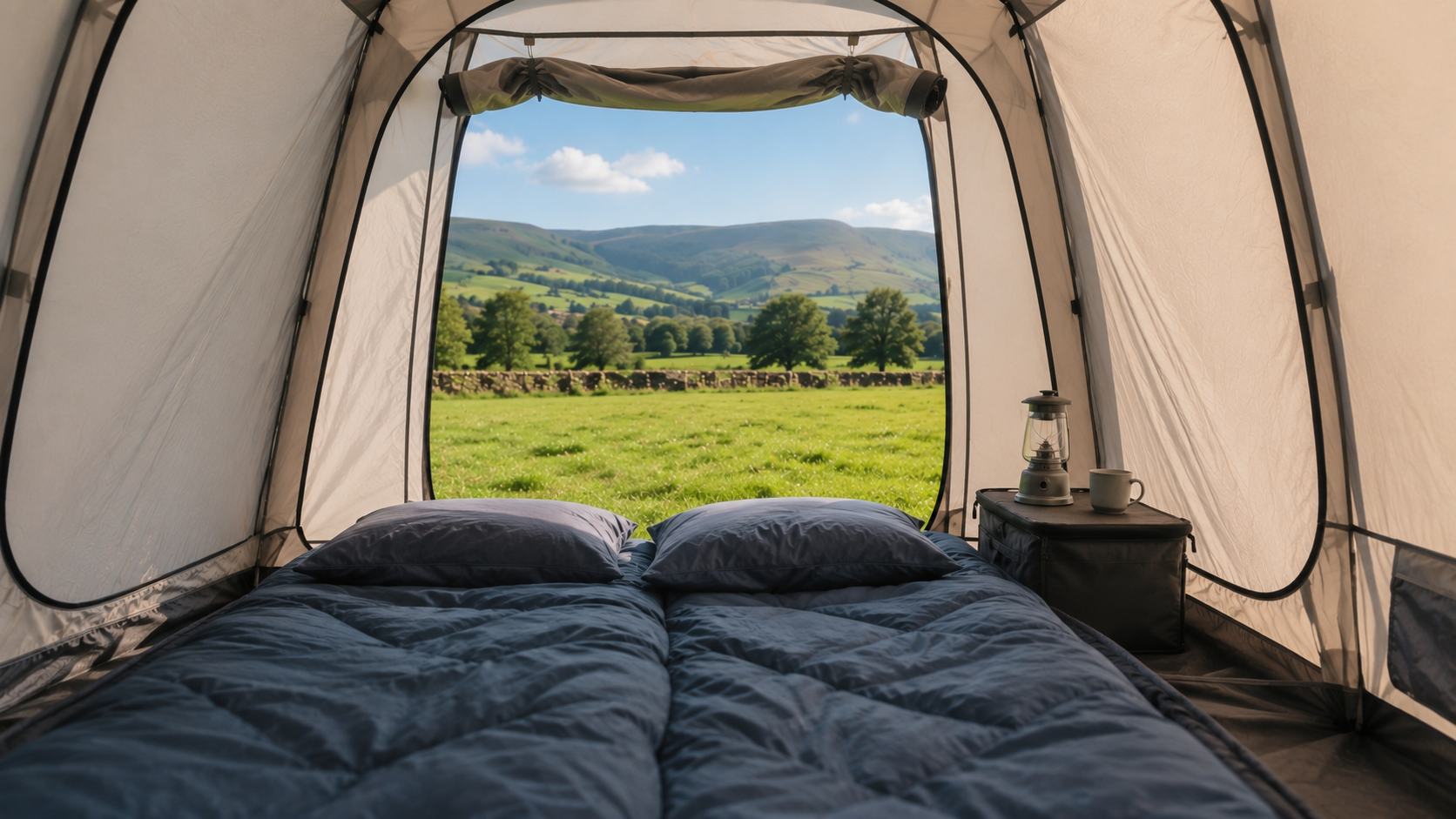
For car camping, I would take a proper Naturehike double inflatable camping mattress. A deeper mattress creates more separation from the cold ground and makes the tent feel much more like a temporary bedroom than somewhere you are simply trying to survive until morning.
I would pair it with three-season sleeping bags. Separate bags allow each person to control their own temperature, which can be much more practical than sharing one double sleeping bag.
Always check the temperature guidance on a sleeping bag rather than relying solely on the words “three season”. Even after a warm summer day, the temperature can drop noticeably overnight, particularly in exposed countryside.
Finally, I would add TREKOLOGY inflatable camping pillows. A pillow may sound like a small luxury, but it can make an enormous difference when you are trying to settle down for the night. These also pack away far more neatly than bringing full-sized pillows from home.
Create a comfortable place to sit
Once the tent is standing and everything has been carried over from the car, the first thing I would want to do is sit down with a drink and take in the surroundings.
A supportive chair is worth choosing carefully, particularly if standard folding chairs tend to feel narrow or flimsy. These TIMBER RIDGE heavy-duty camping chairs offer a wider, more substantial place to sit and fit nicely with the comfortable-camping approach.
I would take two and place them outside the tent with a REDCAMP folding camping table between them. The table gives you a stable surface for drinks, meals, books and playing cards, and it keeps everything away from damp grass.
Together, the chairs and table create a simple little outdoor living area. It is a small touch, but it makes the pitch feel organised and welcoming rather than like a collection of bags scattered around a field.
Pack simple equipment for campsite meals
Camping food does not need to be complicated. A warm drink in the morning, an easy breakfast and a simple evening meal are often all you need.
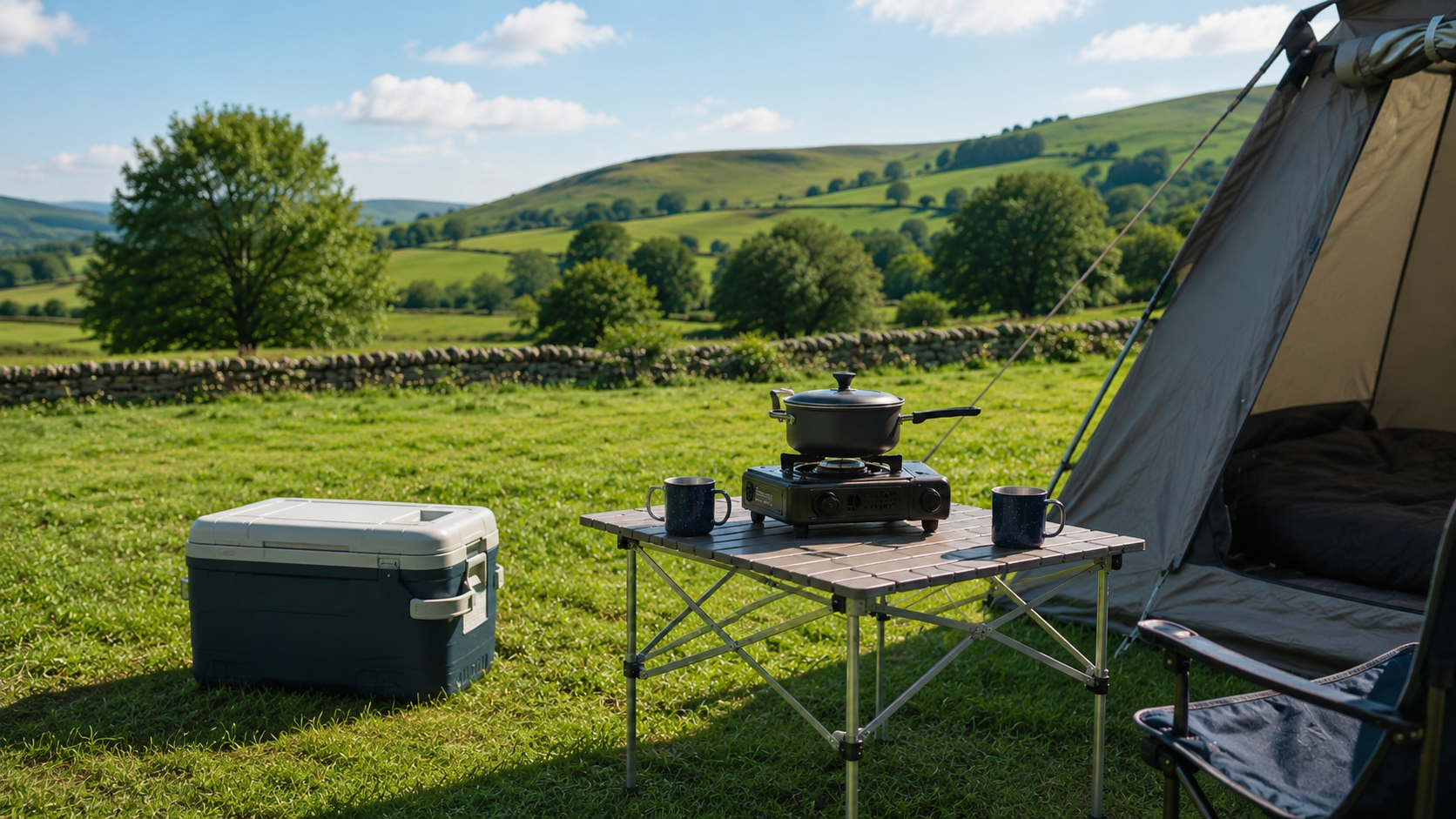
A straightforward single-burner option such as the Campingaz Camp Bistro 3 stove should be more than enough for a short break. It can be used to boil water, heat soup, cook breakfast or prepare an uncomplicated one-pan dinner.
Camping stoves should only be used outdoors in a properly ventilated area, never inside a tent. You should also check your campsite’s individual cooking and fire rules before travelling.
Rather than packing separate pans, plates, cups and utensils, I would use a 17-piece camping cookware kit. A nesting kit keeps the cooking equipment together and saves valuable space in the car.
It also means that all the basics are ready for that first cup of tea or coffee, which is surely one of the best parts of waking up at a campsite.
Keep food and drinks properly chilled
Even for a two-night stay, you will probably want to take milk, cold drinks, breakfast ingredients and a few easy meals.
A dependable option such as the Coleman Xtreme cool box should provide plenty of room without becoming excessively large for two people. Pack it shortly before leaving, use properly frozen ice packs and avoid opening it more often than necessary.
Before buying food for the whole trip, check what is available close to your campsite. Some rural sites are a reasonable distance from the nearest shop, so it is better to know in advance whether you need to arrive fully stocked.
Avoid repeated walks to the campsite tap
A water carrier is one of those practical items that may not look particularly exciting online, but you will be glad you packed it.
A Vango 10-litre water carrier with a tap can be filled after you have pitched the tent and kept beside your cooking area. It gives you easy access to water for drinks, cooking and basic washing without walking backwards and forwards to the campsite facilities every time you need it.
I would still bring separate drinking bottles for walks and days out. The larger container is best treated as your supply of water at the pitch.
Plan for the moment daylight disappears
A countryside campsite can become extremely dark once the sun has gone down, particularly when there is little lighting around the pitches.
I would hang an LE rechargeable camping lantern inside the tent or place it on the table during the evening. A rechargeable lantern is useful for getting organised, preparing food and winding down without relying on the torch built into your phone.
I would also pack a two-pack of Blukar rechargeable head torches, with one for each person. They are ideal for late-night trips to the facilities because they light the way while leaving both hands free.
Charge the lantern and head torches fully before leaving home and keep the charging cables together in one small bag.
The extras I would not leave behind
Alongside the 12 main items, there are a few smaller essentials that should always make it onto the packing list:
Waterproof jackets and warm layers
Comfortable walking shoes or boots
Spare socks
A basic first-aid kit
Regular medication
Toiletries and towels
Sun cream
Insect repellent
Bin bags
A tent mallet
A small tent-repair kit
Phone charging cables and a power bank
Food, snacks and drinking water
British weather can change quickly, so I would pack for cooler and wetter conditions even when the forecast looks promising. A dry bag or a few reusable waterproof pouches can also help protect clothing, electronics and important documents.
A little preparation makes camping much more enjoyable
Camping does not have to mean sleeping on a paper-thin mat, eating cold food and spending two days feeling damp.
With a roomy tent, a comfortable sleep setup and a few practical pieces of equipment, a short camping break can feel genuinely relaxing. The Peak District offers a beautiful setting for it, whether you prefer gentle countryside walks, exploring local villages or simply sitting outside the tent with a morning coffee.
Choose an official campsite, check its individual rules and facilities, and make a proper packing list before leaving home. Once the essentials are covered, all that remains is to hope for decent British weather.