AD — As an Amazon Associate I earn from qualifying purchases.
Planning Guide
8 Useful Garden Finds for a Satisfying Autumn Tidy-Up
Autumn brings some of the most satisfying jobs in the gardening calendar. These eight practical finds can make supporting, pruning, planting, clearing and organising your garden feel much more manageable before winter arrives.
Researched by Big Deal Babe·
Planning your autumn tidy-up
There is something particularly satisfying about an autumn afternoon in the garden. The light is softer, the borders are beginning to change and even an hour spent pruning, clearing and putting things back in order can make the whole space feel calmer.
Latest Garden Deals
Prices and savings are live but subject to change.
It does not have to become a huge weekend project. The most useful approach is often to work through the garden in stages: support anything that is still flowering, tidy plants where necessary, prepare for the next growing season, clear away the resulting debris and finally give the tools somewhere sensible to live.
The RHS gardening calendar is useful for checking which seasonal jobs are appropriate for a particular month. Once you know what needs doing, having a few practical tools nearby can make it much easier to get started.
Support the plants that are still putting on a show
Early autumn does not mean that everything in the garden has finished. Dahlias, chrysanthemums, asters and other late-flowering plants can still bring plenty of colour, but taller stems may begin to lean after wind or heavy rain.
Adding plant support stakes before stems collapse can help keep the border looking orderly while allowing the flowers to remain the focus. Dark-green supports are particularly useful because they tend to disappear among the foliage rather than becoming a noticeable feature themselves.
It is worth positioning supports carefully and securing stems loosely. The aim is to guide the plant rather than pull it into an unnaturally rigid shape.
Make pruning deliberate rather than drastic
A good pair of secateurs is one of those tools that earns its place throughout the gardening year. In autumn, they are useful for removing damaged stems, deadheading plants that may flower again and dealing with small pruning jobs as you move around the garden.
It can be tempting to cut everything back as soon as the weather changes, but there is no need to make the garden completely bare. Some seed heads provide structure and interest through winter, while others can offer food and shelter for wildlife.
A more selective tidy-up usually looks better and avoids creating unnecessary work. Remove what is damaged, diseased or genuinely untidy, then leave anything that still adds something to the border.
Take some of the strain out of ground-level jobs
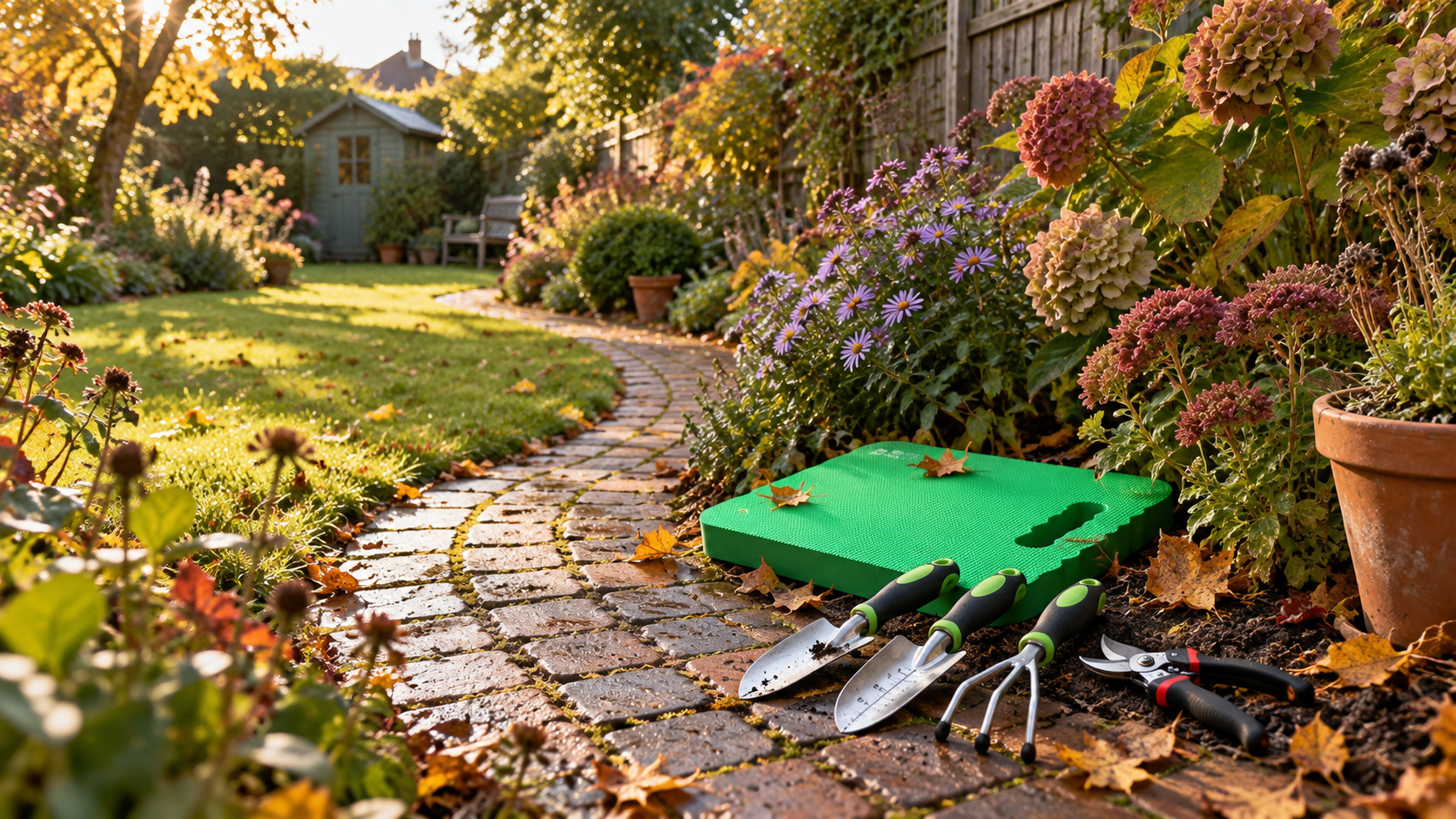
Planting, weeding and working around the front of a border can be surprisingly tiring when you are repeatedly kneeling on cold paving or damp soil. A thick garden kneeling pad gives you a more comfortable place to work and is easy to move along the border as you go.
Keeping a small gardening hand-tool set beside it means you are less likely to keep getting up to fetch the tool you have forgotten. A hand trowel is useful for planting and moving soil, while a hand fork can loosen the surface and help lift shallow-rooted weeds.
For more focused planting jobs, a planting tool set can help create neater planting holes and make spacing feel less haphazard. It is especially useful when you have several bulbs or small plants to put in and want to work methodically along a bed.
These are not glamorous jobs, but autumn planting is one of the pleasures of gardening: a little effort now gives you something to look forward to when spring arrives.
Do not put the watering can away too soon
The air may feel cooler, but containers and newly planted bulbs or plants can still need attention during dry spells. A generously sized watering can makes it easier to water several pots or a stretch of border without constantly returning to the tap.
Aim the water towards the soil rather than splashing the leaves, and check containers individually instead of assuming cooler weather means they are still damp. Pots sheltered beside walls or beneath overhanging foliage can dry out more quickly than expected.
New planting also benefits from being watered in properly. This helps settle the surrounding soil and removes large air pockets around the roots or bulbs.
Clear as you go
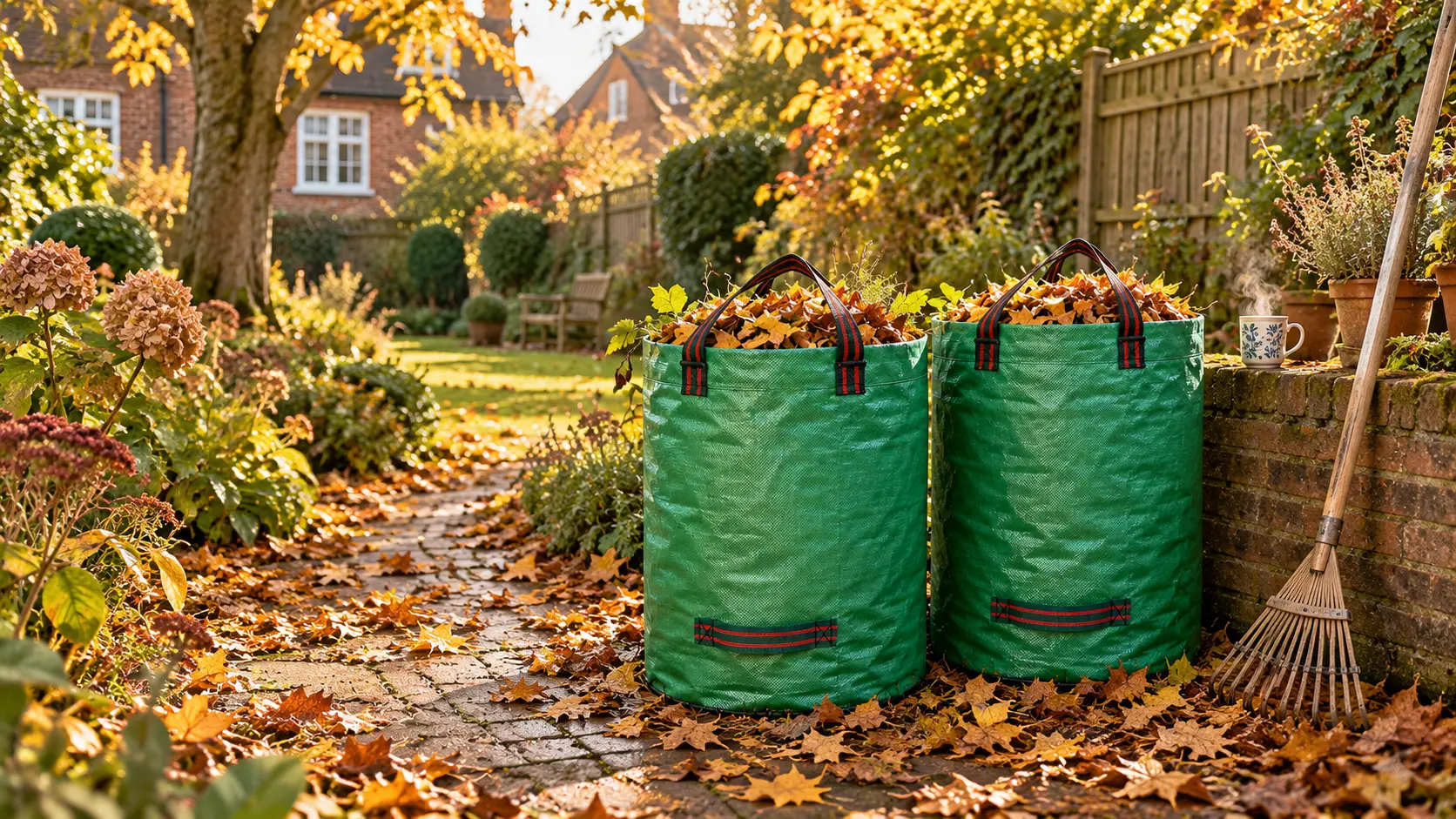
Pruning and tidying become much easier when there is somewhere to put the debris immediately. Large heavy-duty garden waste bags can be positioned beside the area you are working on and filled as you move along the border.
They are useful for fallen leaves, light clippings and spent plant material, particularly when the compost heap or garden-waste bin is some distance away. Carrying one larger load is considerably less frustrating than making repeated trips with armfuls of stems.
Sort the contents before disposal where practical. Healthy leaves and suitable soft material may be useful for composting, while diseased plant material and troublesome weeds may need to be handled separately according to your local garden-waste arrangements.
There is no need to remove every fallen leaf from every part of the garden. Leaves can offer useful habitat and protection in suitable areas, but clearing paths and excessively thick, wet layers helps keep frequently used spaces safer and tidier.
Give everything a proper home when you finish
The final job is often the one that gets skipped. Tools are left against the fence, gloves disappear beneath a pile of pots and the hose somehow ends up across the shed floor.
A mobile weatherproof garden tool rack provides one place for long-handled tools, smaller hand tools, gloves and other frequently used gardening equipment. Keeping everything together makes the garden or shed feel more organised, but it also removes one of the barriers to starting the next job.
A freestanding organiser can be positioned where you naturally finish working rather than hidden in the least accessible corner. Clean off heavy soil before putting tools away, allow damp gloves to dry and check cutting tools before storing them.
A calmer garden before winter
An autumn tidy-up is not about making the garden perfect. It is about protecting what is still growing, preparing for what comes next and making the outdoor space feel manageable as the seasons change.
With supportive stakes, reliable cutting and planting tools, a comfortable place to kneel, a useful watering can, roomy waste bags and somewhere organised to store everything afterwards, even a short gardening session can make a visible difference.
Choose one border or one type of job, make yourself a cup of tea and begin there. The rest can wait for another crisp afternoon.